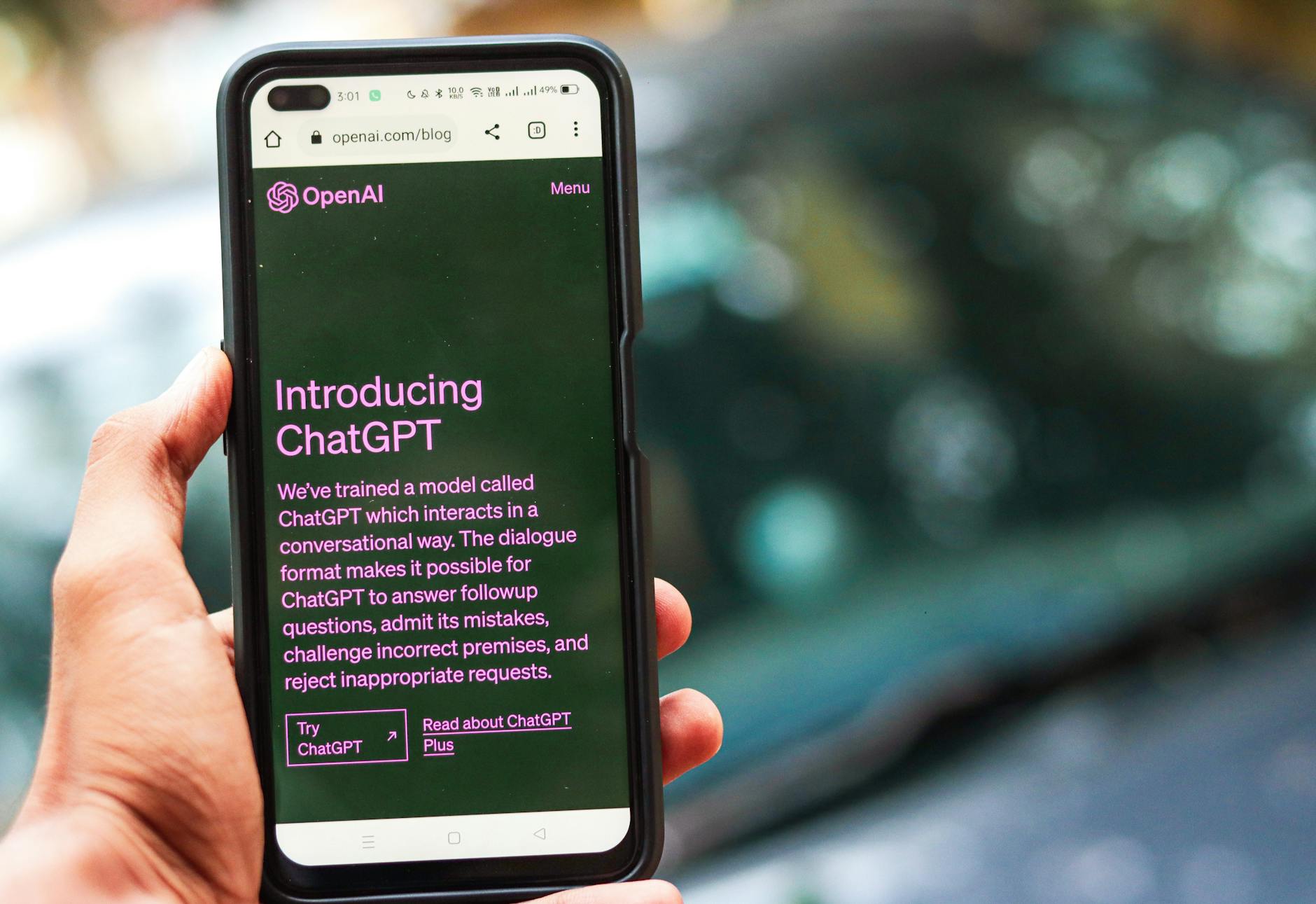
From DIY to Done-Right: Unpacking the OpenAI API and Why Compatibility Matters for Your LLM
When delving into the world of Large Language Models (LLMs), understanding the OpenAI API is paramount, especially if you're considering integrating advanced capabilities into your own applications. This isn't just about making requests; it's about grasping the underlying architecture that allows you to tap into powerful models like GPT-3.5 and GPT-4. Whether you're a developer embarking on a DIY project or part of a larger team aiming for a "done-right" enterprise solution, the API serves as your gateway. It dictates how you send prompts, receive completions, manage conversations, and even fine-tune models. A deep dive into the API documentation reveals the nuances of parameters, rate limits, and authentication, all crucial for building robust and scalable AI-powered features. Ignoring these details can lead to inefficient code, costly errors, and ultimately, a less effective LLM implementation.
Compatibility, therefore, isn't merely a buzzword; it's the bedrock upon which successful LLM integration rests. Your custom LLM, whether built from scratch or fine-tuned on existing models, needs to speak the same language as the OpenAI API to truly leverage its power. This means aligning your data formats, understanding response structures, and architecting your application to seamlessly interact with the API's endpoints. Consider scenarios like:
- Streaming responses efficiently for real-time user experiences.
- Handling diverse input types, from plain text to structured data.
- Implementing robust error handling for uninterrupted service.
"A well-designed integration ensures that the sum is greater than its parts, transforming a standalone LLM into a dynamic and intelligent system."Without careful attention to compatibility, even the most innovative LLM can struggle to perform optimally, leading to frustration and underutilized potential.
A Google Maps Scraper API allows developers and businesses to programmatically extract data from Google Maps, such as business listings, contact information, reviews, and location data. This can be invaluable for market research, lead generation, and competitive analysis. By leveraging a Google Maps Scraper API, users can automate the collection of large datasets that would be time-consuming and inefficient to gather manually, opening up new possibilities for data-driven strategies.
Beyond the Hype: Practical Strategies for Leveraging OpenAI-Compatible LLMs and APIs
With the initial buzz surrounding LLMs starting to settle, the focus for SEO professionals and content creators is shifting towards actionable implementation. It's no longer enough to simply acknowledge their existence; the real value lies in understanding how to integrate OpenAI-compatible LLMs and APIs into existing workflows to achieve tangible results. This means moving past generic content generation and exploring more sophisticated applications. Consider leveraging these tools for:
- Deep Dive Keyword Research: Analyze search intent and identify long-tail keywords with unprecedented accuracy.
- Competitor Content Gap Analysis: Quickly pinpoint what your rivals are missing and generate compelling content to fill those voids.
- Automated Content Brief Generation: Streamline the brief creation process, ensuring all essential SEO elements are included from the outset.
- Personalized Content Adaptation: Tailor existing content to different audience segments or search queries with minimal manual effort.
The key is to view LLMs as powerful assistants, not replacements, for human strategists and writers.
Successfully leveraging OpenAI-compatible LLMs and APIs requires a strategic approach, blending automation with human oversight. One practical strategy involves augmenting your existing content creation pipeline rather than completely overhauling it. For instance, instead of relying solely on an LLM to write an entire article, use it for tasks that are traditionally time-consuming or repetitive. This could include generating multiple headline variations, crafting meta descriptions and titles that are optimized for specific keywords, or summarizing lengthy research papers to extract key insights for blog posts. Furthermore, establishing clear guidelines and guardrails for LLM use is paramount. This ensures brand voice consistency, factual accuracy, and avoids the pitfalls of generic, uninspired content. Regularly review and refine your prompts and fine-tune models with your own data to maximize their relevance and effectiveness for your niche.